
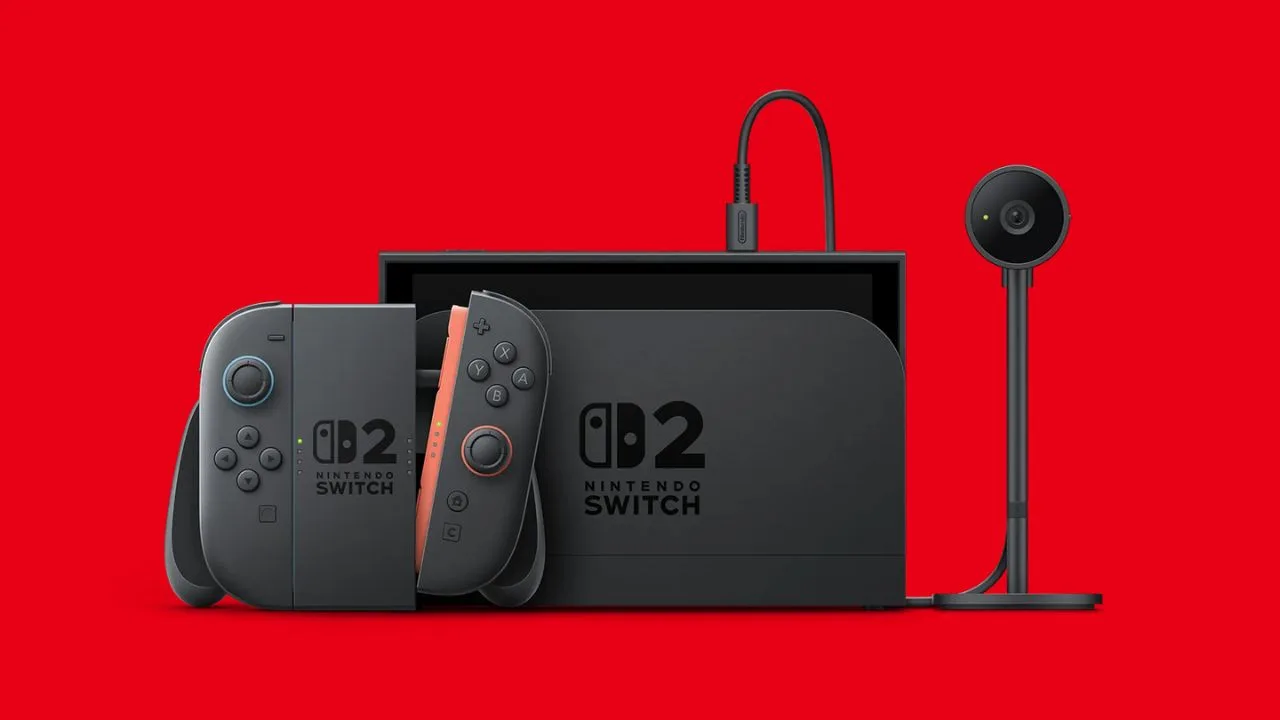
A Nintendo confirmou os detalhes técnicos do Switch 2, com lançamento marcado para 5 de junho de 2025. O novo console estreia com um processador personalizado desenvolvido em parceria com a NVIDIA, o T239, além de avanços em memória, armazenamento e processamento gráfico.
- Procon-SP notifica Nintendo por cláusulas abusivas em contrato
- Genshin Impact apresenta Skirk e Dahlia para a versão 5.7
A arquitetura do chip inclui oito núcleos Arm Cortex-A78C com suporte exclusivo a instruções de 64 bits. Dois núcleos ficam dedicados ao sistema operacional, enquanto os outros seis estão disponíveis para jogos. A frequência de operação varia conforme o uso, alcançando até 1.700 MHz em situações específicas.

GPU Ampere garante salto gráfico
A unidade gráfica do Nintendo Switch 2 utiliza a arquitetura Ampere, com 1.536 núcleos CUDA. Essa mudança representa uma evolução expressiva em relação à geração anterior, que contava com apenas 256 núcleos. A nova GPU opera a 561 MHz no modo portátil e 1.007 MHz no modo docked.
Com essa configuração, o desempenho gráfico chega a 3,07 teraflops no dock, contra os 0,39 teraflops do Switch original. O console também é compatível com tecnologias como DLSS e ray tracing, embora ainda não haja jogos anunciados que explorem esses recursos. A expectativa é que futuros lançamentos, como Star Wars Outlaws, possam utilizá-los.
Além disso, o ray tracing oferece capacidade de até 10 gigarays por segundo em modo portátil e 20 no dock. Mesmo com parte da GPU reservada para tarefas do sistema, o ganho em potência disponível para jogos é significativo.
Memória LPDDR5X aumenta desempenho
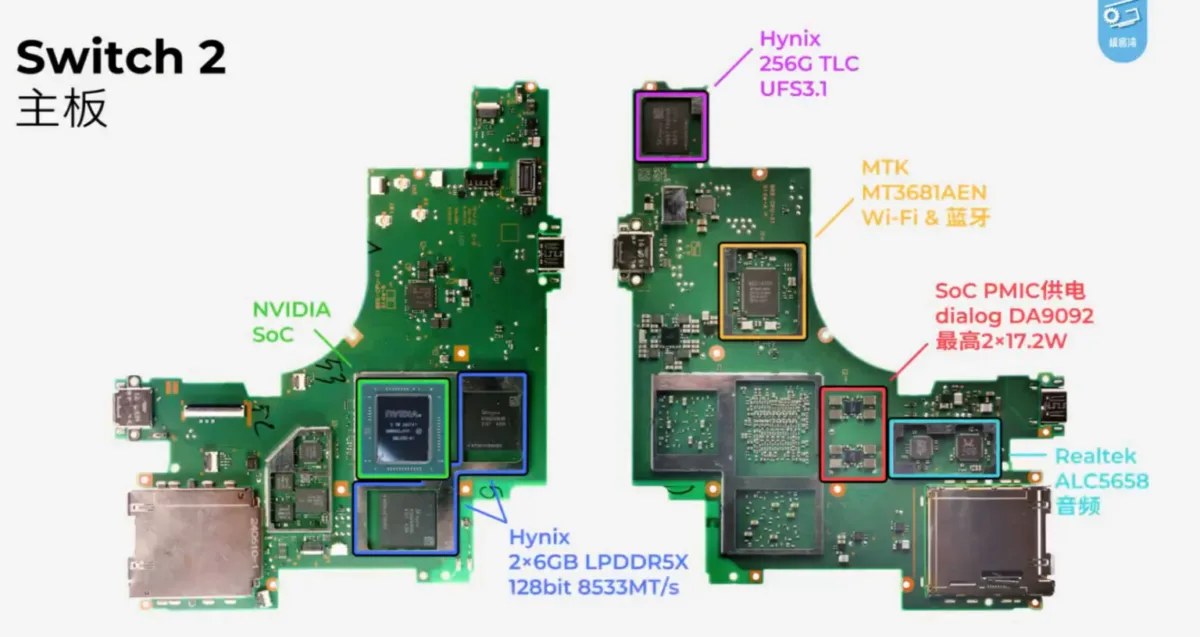
O Nintendo Switch 2 chega com 12 GB de memória LPDDR5X, divididos em dois módulos de 6 GB. A largura de banda atinge 102 GB/s quando conectado ao dock e 68 GB/s no modo portátil. Essa nova configuração representa quase o triplo da capacidade anterior.
Desses 12 GB, 9 estão livres para jogos e aplicações, enquanto os outros 3 ficam reservados ao sistema. No primeiro modelo, apenas 3,2 GB estavam disponíveis para os jogos, o que limitava a execução de títulos mais exigentes.
A nova memória contribui diretamente para a velocidade de carregamento e a estabilidade dos jogos, principalmente aqueles com mundos abertos e texturas de alta resolução.
Armazenamento triplica e ganha motor de descompressão
O novo console traz 256 GB de armazenamento interno do tipo UFS, contra os 32 GB eMMC da versão anterior. A expansão continua possível via cartão MicroSD, agora com suporte ao padrão Express, que permite até 2 TB adicionais.
O Switch 2 também estreia um recurso inédito na linha: um motor dedicado para descompressão de arquivos. Chamado de File Decompression Engine (FDE), o sistema trabalha com o formato LZ4, liberando o processador principal para outras tarefas.
Esse mecanismo ajuda a reduzir o tempo de carregamento sem sobrecarregar o chip principal, o que também contribui para o controle térmico do aparelho.

Tela cresce e ganha HDR e taxa variável
A tela do Switch 2 possui 7,9 polegadas, com resolução de 1080p, suporte a HDR10 e taxa de atualização variável (VRR) de até 120 Hz. O painel multitouch de dez pontos mantém a interatividade dos modelos anteriores, mas com mais qualidade de imagem.
O recurso de VRR funciona apenas na tela integrada e não está disponível via HDMI. Isso ocorre por limitações do conversor DisplayPort para HDMI usado no dock, o que já havia sido sugerido em análises anteriores.
Apesar dessa restrição, a nova tela representa um avanço relevante, principalmente para quem joga no modo portátil, com imagens mais suaves e detalhadas.
O que as especificações revelam sobre a nova fase do Switch
O Nintendo Switch 2 representa um avanço técnico relevante, com foco em desempenho equilibrado e otimização inteligente. A adoção de GPU Ampere, DLSS e maior quantidade de RAM mostra que a Nintendo quer manter sua proposta portátil, mas sem limitar os desenvolvedores como antes. O console agora tem fôlego para rodar títulos modernos com mais fluidez e menor perda gráfica, especialmente com o apoio do DLSS.
Além disso, o motor de descompressão e a RAM mais veloz indicam um cuidado com eficiência energética e experiência de uso, priorizando carregamentos rápidos e menor aquecimento. A ausência de VRR via HDMI reforça que a prioridade ainda é o modo portátil, e não competir diretamente com PS5 ou Xbox.
Em resumo, o Switch 2 é um console mais maduro e preparado para a nova geração de jogos, equilibrando bem potência, portabilidade e inteligência técnica, sem perder a essência da proposta híbrida que o tornou um fenômeno global.