
After almost a decade of waiting, Civilization 7 has finally arrived, and the gaming community's expectations were sky-high. The franchise, which dominates the 4X (Exploration, Expansion, Extraction, and Extermination), introduces new features that promise to renew the experience, both for veterans and beginners.
- Monster Hunter Wilds launches new event quests in March
- Genshin Impact: Check out the codes for March (2025)
The game abandons the linear timeline and adopts a more dynamic era system, creating matches that radically transform as the player progresses. But does this innovation work in practice? Let's explore the strengths and weaknesses of this new approach.
Changes in the Eras: One game, three different experiences
One of the great revolutions in Civilization 7 is the new era system, divided into Antiquity, Exploration, and Modern. Now, each era imposes challenges and drastic changes in the game, making each session feel like a completely new experience.
This means that even players who start out strong can face difficulties when transitioning between historical periods. The opposite is also true: if the beginning isn't promising, there are still chances to recover throughout the game. The secret lies in the bonuses and legacies acquired during the journey.

Leaders and Civilizations: More strategy and customization
Strategy customization reaches another level with the ability to switch civilizations each era while keeping the same leader. This allows for unprecedented combinations and unique strategies, as well as rewarding accumulated experience with specific characters.
Another great new feature is the leader XP system , which grants exclusive advantages as the player specializes in a particular character. This mechanic encourages different approaches and makes each game unique.
End of the builders and a new dynamic of influence
Removing builders simplifies city administration, making management more fluid and accessible. Now, construction and production are organized more intuitively, without the need for excessive micromanagement.
Furthermore, the independent peoples, who replace the former barbarians, bring new interactions. The addition of the Influence resource, alongside gold, culture, and science, adds another strategic layer to the game, making diplomacy more relevant.

Graphics and soundtrack: An immersive experience
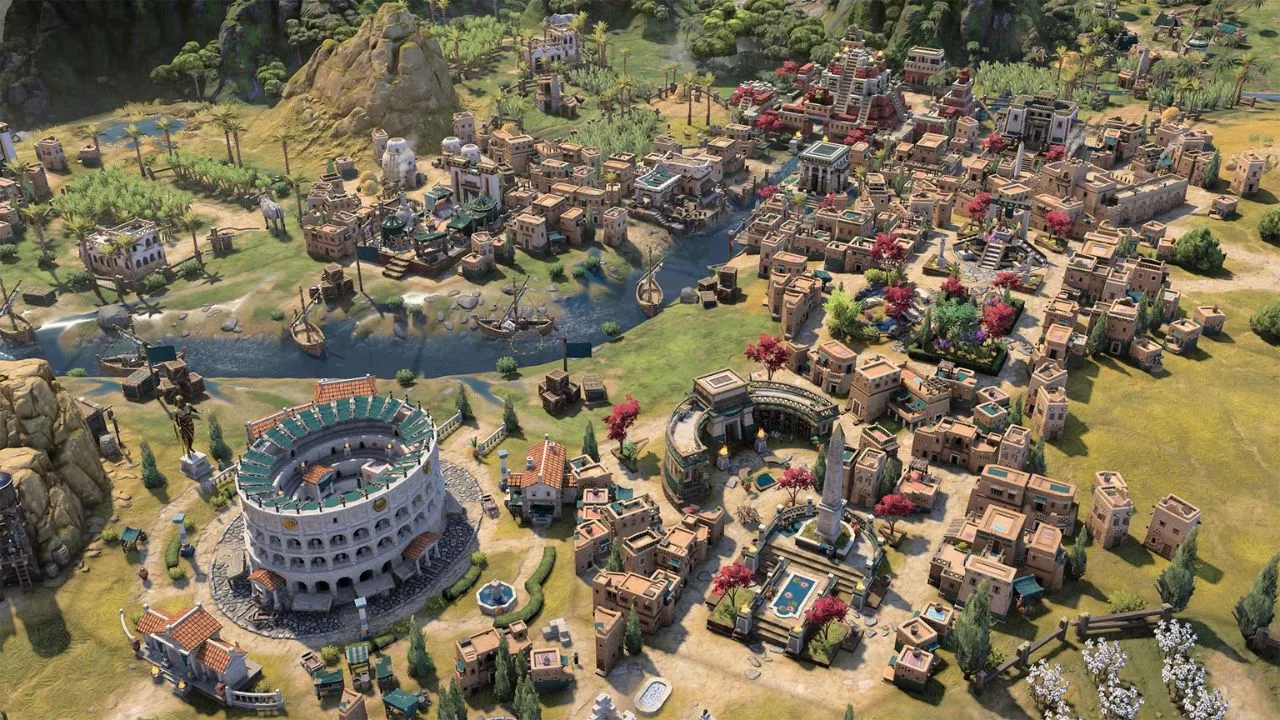
Visually, Civilization 7 represents a significant leap forward compared to its predecessor. The graphics are more detailed, less cartoonish, and provide a more vibrant world. The wonders of the world and the new dynamic landscapes add even more depth to the map.
The soundtrack is also impressive, keeping pace with the evolution of civilizations and adapting to the chosen leader. This sonic immersion reinforces the atmosphere of each era and increases the feeling of progress within the game.
Late game and performance: Balance between depth and fluidity
With so many new mechanics and the possibility of progressing through different eras, it was expected that the game would become heavier in the late game. However, Firaxis managed to maintain fluidity even in the most advanced stages.
Legacy points , which indicate the player's position in Culture, Economy, Military, and Science, make matches more balanced until the end. Even so, for those who prefer a shorter experience, there is the option to limit the campaign to a specific era , which favors competitive and multiplayer play.
Is Civilization 7 worth playing?
The answer is simple: yes. Whether you're a franchise veteran or a newcomer to strategy games, Civilization 7 offers a fresh and accessible experience.
With innovative mechanics, impressive graphics, and a more dynamic strategic system, the game has everything it takes to become a benchmark in the 4X genre for years to come. Thus, the wait was worthwhile, and Civilization 7 is already emerging as one of the best in the series.