


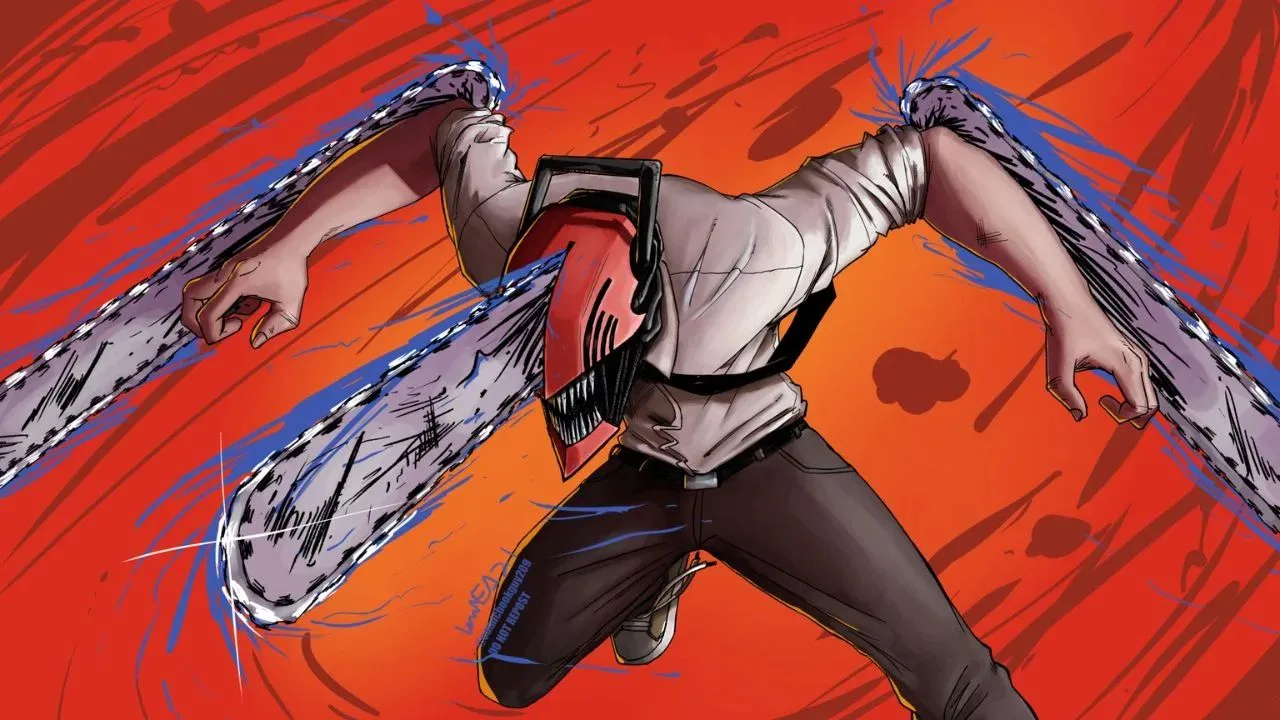
Fakesaw Man is one of the most enigmatic figures in Chainsaw Man. His resemblance to Denji has fueled theories about multiple versions of the character. However, narrative and visual clues indicate that there is only one true Fakesaw Man. His presence serves as a distorted mirror of the protagonist, revealing the dangers of hero worship in a desperate society.
- Boruto: Two Blue Vortex may reveal a new side of the Otsutsuki clan
- One Piece: Domi Reversi and Imu's strength in chapter 1150
Tatsuki Fujimoto's creation leaves no room for coincidence. The supposed existence of multiple Fakesaw Men is based on visual and behavioral changes. However, these variations reflect psychological and symbolic evolution. The construction of the character as a direct counterpoint to Denji gives meaning to the narrative choice of maintaining his unique identity.
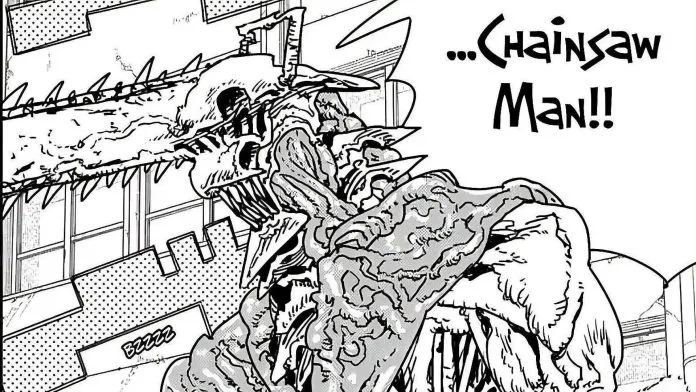
The origin of the Fakesaw Man reveals a twisted hero
Fakesaw Man emerges as an imitator of Chainsaw Man during the chaotic events of the second part of the manga. His resemblance to Denji isn't limited to his brutal appearance with a chainsaw head and saws for arms. The population mistakes him for the real protagonist, which generates immediate admiration.
This false identity is no accident. The character seeks to represent the same ideal of justice attributed to Chainsaw Man. However, without understanding the human motivations that drive Denji, the imitator ends up becoming merely a violent reflection of what he believes to be a hero.
Furthermore, the lack of emotional connection with the audience and the absence of real bonds make Fakesaw Man a symbol of blind idolatry. He acts without understanding the pain or sacrifices involved in fighting demons, which makes him dangerous not through strength, but through alienation.
The connection with the fire demon and its symbolic transformation
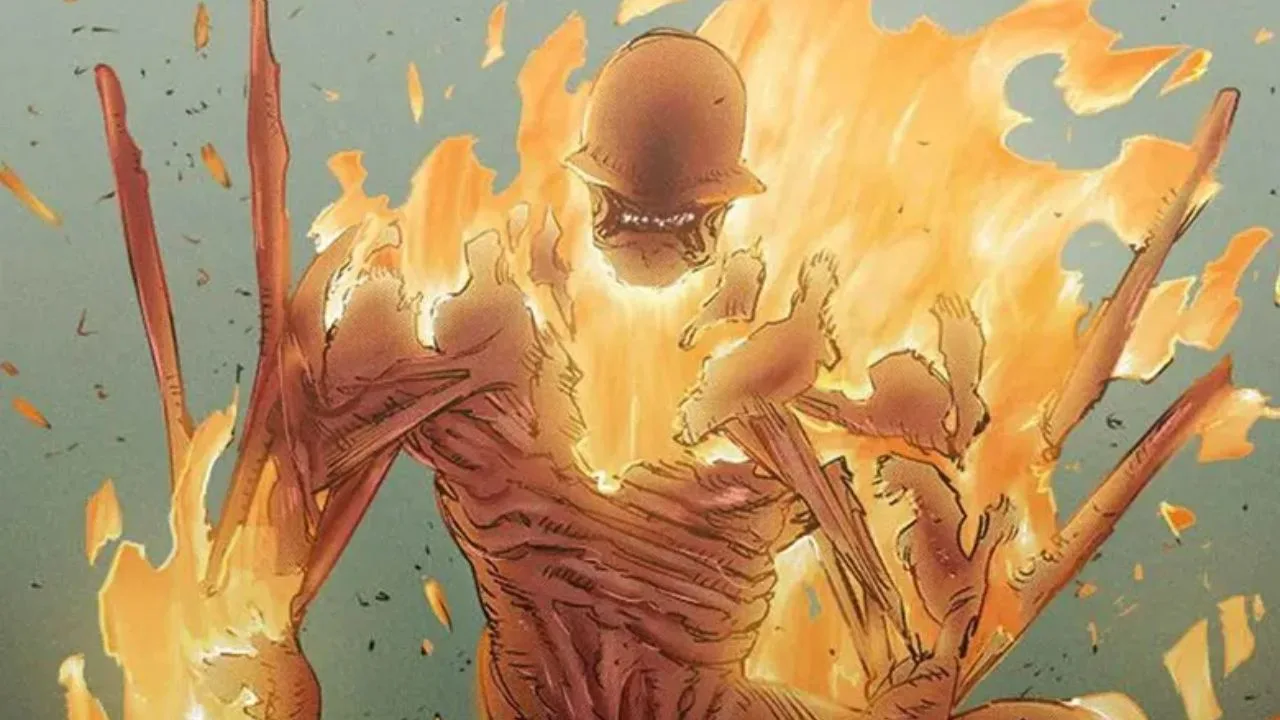
The alliance with the fire demon is one of the most relevant clues about Fakesaw Man's unique identity. Fire, traditionally linked to progress and enlightenment, takes on new meaning when used to cause destruction and manipulation.
This partnership represents a reversal of the values that define Denji. While the protagonist establishes a sincere pact with Pochita, the Fakesaw Man attempts to replicate this bond with misguided motivations. The result is a grotesque transformation that reflects not evolution, but emotional degradation.
This visual change in the character, pointed out by many as proof of multiple versions, reinforces his moral downfall. The body becomes increasingly monstrous, symbolizing the growing distance between intention and consequence. What was idealism turns into madness, what was admiration turns into obsession.
Fujimoto avoids repeating villains to maintain narrative focus
Tatsuki Fujimoto has always avoided redundant narratives. His stories prioritize the internal development of the characters, without resorting to multiple versions to resolve conflicts. The existence of only one Fakesaw Man follows this logic.
Creating more than one version of the same villain would weaken the central message of the plot. The Fakesaw Man exists to show what happens when someone tries to be Denji without understanding his essence. There's no room for duplicity in this kind of counterpoint.
Therefore, the distinct traits in some of the character's appearances are marks of his personal journey. They do not represent separate entities, but phases of the same process of downfall. By preserving this unity, the author ensures symbolic strength to the confrontation between him and Denji.
The final battle is the culmination of a metaphor about identity
The clash between Denji and Fakesaw Man is not merely physical. It represents the clash between authenticity and imitation, between humanity and idolatry. Denji wins not because he is stronger, but because he understands who he is and what he wants.
Fakesaw Man, on the other hand, never had that self-awareness. He tried to copy a symbol without understanding the man behind it. That's why he fails. His defeat concludes not only a battle, but a critique of the cult of the empty hero.
The character's arc concludes when their narrative function is fulfilled. They represent the mistake of following ideas without reflection. By existing as a unique figure, they become a clear warning about the dangers of admiring idols without seeing their flaws and motivations.