


The anime industry has undergone a major metamorphosis in the last twenty years, but one trend that continues to spark discussions among otaku is the rise of large titles.
- Top 5 Psychological Anime That Will Make You Go to Therapy
- Castlevania: Nocturne delivered a sequel worthy of the original series
In the early 2000s, we had anime whose titles were just one or two words, such as Naruto , Bleach , One Piece , Dragon Ball , among others. These anime were adaptations of popular manga that were released in the 80s and 90s.
Over the years, other media have also received anime adaptations, such as visual novel games and light novels (LN).
Light novels are most likely responsible for popularizing "descriptive titles," which are titles that essentially describe the work.
While it's impossible to pinpoint exactly which works started the trend, two stand out: the light novel Suzumiya Haruhi no Yuuutsu ( The Melancholy of Haruhi Suzumiya ), written by Nagaru Tanigawa and illustrated by Noizi Ito, published in Kadokawa Shoten's seinen magazine The Sneaker in 2003; and Toaru Majutsu no Index ( A Certain Magical Index ), written by Kazuma Kamachi and illustrated by Kiyotaka Haimura, published in ASCII Media Works' Dengeki Bunko magazine in 2004.
At this point we begin to see that the titles were not merely an identifier, but rather a suggestion of what the story of the work is about. Especially in the case of the light novel "The Melancholy of Haruhi Suzumiya," which highlights a character's feelings in the title, hinting at the possibility of a dramatic story or a tragicomedy.
But why do light novels have such long titles?

There are a few points to consider before reaching a conclusion on this question. First, most light novels with "descriptive titles" are self-published online by the authors on webnovel websites.
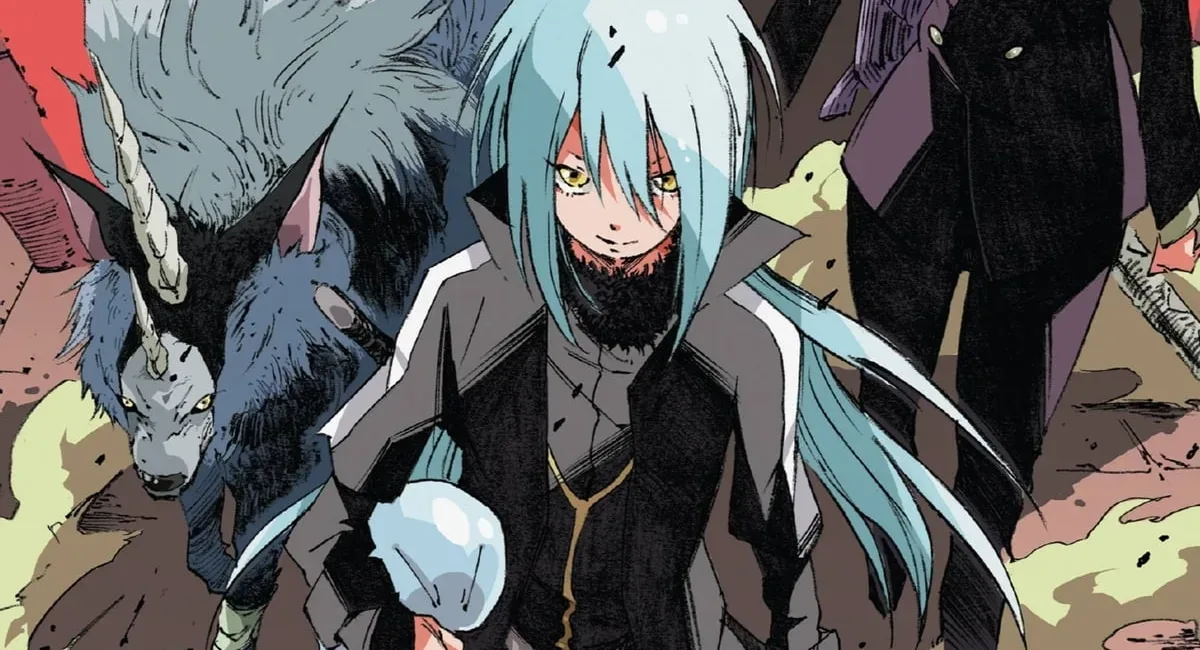
The website Shosetsuka ni Naro, for example, gave rise to the light novels Tate no Yuusha no Nariagari ( The Rising of the Shield Hero ), Tensei shitara Slime Datta Ken ( That Time I Got Reincarnated as a Slime ) and Kono Subarashii Sekai ni Shukufuku wo! ( KonoSuba: God's Blessing on this Wonderful World! ).
Despite the favorable environment for creating a story, authors had to adapt to attract readers. Web novels rarely have illustrations, so there was no visual appeal, in addition to the high competition from light novels on publishing websites.
Given people's aversion to reading synopses, authors began trying to describe the story's plot in the title in order to draw more attention to the work, making the title itself a hook for the story.
Although the title “ The Time I Reincarnated as a Slime ” may seem simplistic at first glance, it serves the purpose of arousing the readers' curiosity. This unconventional choice raises an intriguing question in the public's mind: “How can someone reincarnate as a slime?” – a question that precisely reflects the author's intention and his ability to generate interest in his work.
"We've noticed that many light novel titles are extremely long. Why do you think that is?"
The author of the light novel “Kouri no Reijou no Tokashi Kata” ( How To Melt The Ice Queen's Heart ), Kakeru Takamine, answered this question in an interview with the website Anime Corner .
“That’s such a good question. This background is a long story to explain. Many Japanese readers now want the title alone to explain the whole story. They use the title to decide whether or not to buy a novel, so a detailed explanation is necessary. Inevitably, there will be many long titles. I didn’t like that, so I made mine short.”
Impact and adaptation
"Descriptive titles" continue to face resistance within the otaku community. These titles have often become a source of ridicule due to their length and the amount of detail they reveal about the plot.
Initially, there was antipathy towards stories with long titles, such as that of "Tensei shitara Slime Datta Ken" itself, which was ridiculed upon its release. However, over time, this resistance gave way to the understanding that, behind a seemingly unassuming title, a captivating plot could be hidden.
Currently, in my personal opinion, the joke about the long title is a healthy joke. "Descriptive titles" were a necessity that came from light novels; I don't think they should be the rule for creating titles for works, but it's important to understand why they exist in the literary context.