


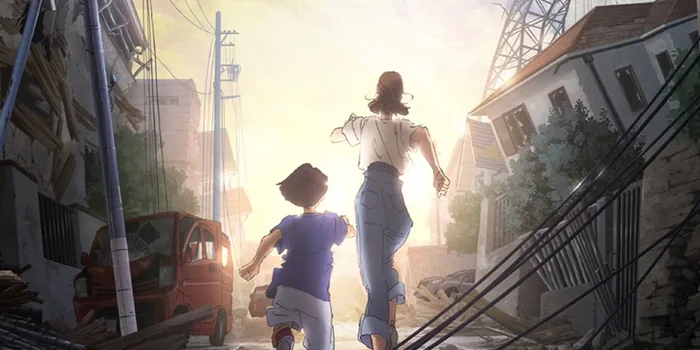
Japan Sinks , or Nippon Chinbotsu (Submerged Japan), is a novel by the writer Sakyo Komatsu , which was published in 1973 by Kobunsha and took nine years to complete.
Japan Sinks: 2020 is an ONA (online original video) licensed by Netflix and animated by the studio Science Saru (The Tatami Galaxy, Eizouken! ) with direction by Pyeon-Gang Ho and the master Masaaki Yuasa ( Devilman Crybaby ).
The anime premiered on July 9, 2020, and has 10 episodes.
This text contains SPOILERS!
Synopsis
Shortly after the 2020 Tokyo Olympics, a massive earthquake strikes Japan. Amid the chaos, siblings Ayumu and Gou Mutou begin fleeing the city with their family. However, the sinking Japanese archipelago relentlessly pursues them. Plunged into extreme, life-or-death conditions, and faced with the choice of finding each other or being separated – confronted with this terrifying reality, the Mutou siblings believe in the future and find the strength to survive with utmost effort.
antipathetic empathy
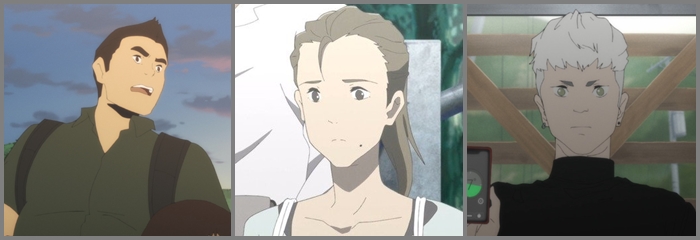
The characters in Japan Sinks are complex, so complex that even the screenwriter didn't understand them. This is why we see scenes with absurd changes in the characters' emotional states, such as when Ayumu's father, Koichiro, dies, and the family is devastated for a few minutes before forgetting the tragedy.
This lack of empathy for death at times detracted from the characters' sense of reality; if a close relative were to die, especially in such a terrible way as in Koichiro's case, the grief would be immense, not to mention all the traumatic scenes the group witnesses.
Despite everything, this expressed grief is somewhat understandable; after all, in an overwhelmingly stressful situation like a natural disaster, the primary concern is survival.
Given that it was an adaptation, these "cuts" were predictable.
All the main characters work well in the story, almost all of them having a well-developed arc. The group starts out very well-equipped with brute force, but gradually loses members, and this doesn't seem to have any effect.
Highlighting the character Nanami Miura, who lived simply to complete her arc, giving emotional strength to Ayumu and fighting against the perverted driver, after which she dies and is IMMEDIATELY replaced by Kite.
Kite (the Ryo cosplayer from Devilman Crybaby) is an excellent character. He arrived driving the story forward like a Deus Ex Machina , having previously been developed as a famous YouTuber. He even raised some mysteries at the end, showing a girl who looks extremely similar to him (who could just be a relative), leaving doubt as to whether it was him in the past, raising the possibility of Kite being a trans man; and how did he survive in the balloon?!
Ayumu, Go and Mari Mutou
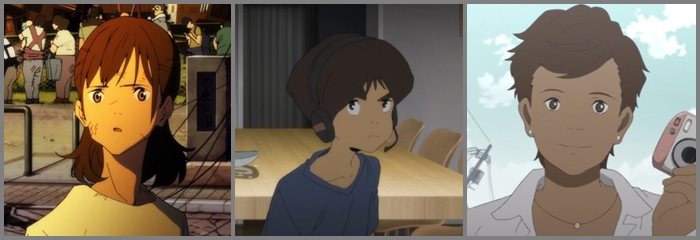
Ayumu begins the story with the aforementioned problem, the damned lack of empathy; she sees her entire team torn apart in a room, leaves there utterly distraught, and then… overcomes it!
The cut on her leg was the only pain she chose to feel; she ignored the rest, and despite feeling the cut, she did absolutely NOTHING to treat it, even though she had several chances to do so.
Go, a companion of hugs and punches with his sister Ayumu, a gamer who dreams of one day participating in the e-Sports Olympics, but... besides being shot with an arrow, would the story have been much different if Go didn't exist?
Mari, Ayumu and Go's mother, is one of the most beloved characters. From the first to the last scene, she was someone who put others before herself, even having a revelation at the end, but unfortunately, her death was painful for her children. (But like all deaths, they overcome it.)
Haruo Koga, Sadboy with motives
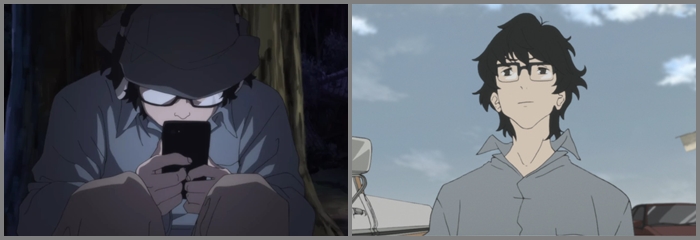
Incredibly, Haruo was one of the characters who best portrayed sadness in the anime, overwhelmed by his departure from the track team and the death of his mother; his behavior perfectly reflects the story.
After witnessing the horrors of the disaster, he ends up going a little "crazy" during the course of the story, but that makes perfect sense; he was grieving, but when he realized what he had and what he had lost while eating curry in Shen City, he woke up to life.
Finally, his death was one of the most emotional, with him reminiscing about his golden moments on the racing team.
 Kunio Hikita, or RAMBO
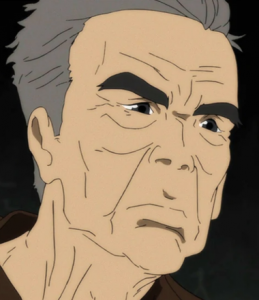 Kunio Hikita, or RAMBO
The bitter old man addicted to morphine, who even in the Japanese apocalypse managed to find a drug supplier, killed security guards with a bow and arrow after doing a 360º spin with an electric shopping cart, was arrested, was freed (by Kite), and even fulfilled his wish before dying (to go to Shen City and speak with the medium Mother).
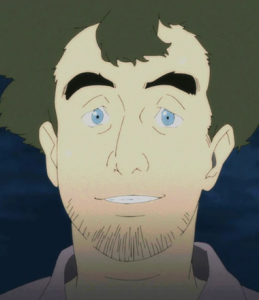
Daniel, thank you!
Daniel was an unexpected character; typically in end-of-the-world/disaster plots, like TWD, everyone is a potential enemy, and when Daniel shows up, the safety manual explodes and the Mutou group decides to help a bizarre guy on the road.
However, to the shock of the fatalists, Daniel, the stateless street artist, was genuinely good!
Interesting points in the story
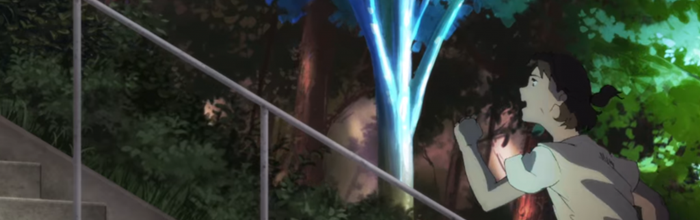
Shen City was one of the most tense parts; after all, placing your family among a suspicious cult in the midst of a semi-apocalypse is never a good idea.
But like Daniel, Shen City took the cliché and crushed it ; it wasn't the perfect community, but it was close, with a real psychic and people working together for each other.
Real problems only arose when nature (and an elderly person) decided to intervene.
The ship that only allowed Japanese passengers, at the perfect moment to be jingoistic, loving Japan in the wrong way at the end of the world, refusing and picking on Mari, who was Filipino, and Go, who was only half Japanese.
Like a medicine, the boat seemed like something that would leave a bad taste in your mouth, but in the end it worked out well; not all opportunities should be accepted.
KITE , already mentioned here, the one who set the gears of history in motion, highlighting an entire plan to help save Japan and three natives, even though he seemed selfish, he (theoretically) sacrificed himself for the greater good.
In the hot springs, one of the few calm parts of the anime, the Japanese people are discussed in an unpretentious and creative way, where the characters share their polarized views.
Animation
The animation in this anime is certainly the biggest reason for people to drop it, just like Devilman Crybaby from Studio Science Saru . The animation is different, but it's not accidental; it's one of the studio's animation styles.
Although the anime holds up well overall, certain scenes, such as the balloon scene in the last episode and occasional instances where the characters' skin looks like crumpled paper, leave a strange feeling, disrupting the immersion.
Final considerations
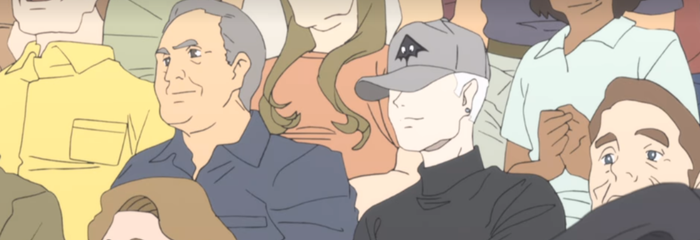
Japan Sinks: 2020 is a great anime; the production definitely put a lot of effort into the final product – and that value, along with its flaws, should be acknowledged. Besides presenting a moving story, the anime both praised and criticized the country that so many love, showing its defects and qualities, why Japan is the land of the rising sun, why the Japanese are so loyal to their country and customs. Imbued with tragedy and hope, Japan Sinks, despite its flaws, deserves to be seen.
"The sun may set, but it will always rise again."
All images used in this article are property of Netflix .